Sacrificial anodes: treatment of galvanic corrosion

High-purity zinc
Lithium-activated mortar
Up to 20 years of service

BlueSpine offers two families of galvanic anodes to protect the reinforcement in reinforced concrete structures. The tied anodes ensure the long-term effectiveness of localized repairs for at least 10 years, without the need for an external power source or wiring. Monitored anodes constitute a fully-fledged galvanic current cathodic protection (GCCP) system, compliant with EN ISO 12696 and NACE SP0290 standards, for areas requiring continuous monitoring throughout their service life.

Request a quote

Ligated anodes

Ensure the longevity of localized repairs without power or wiring

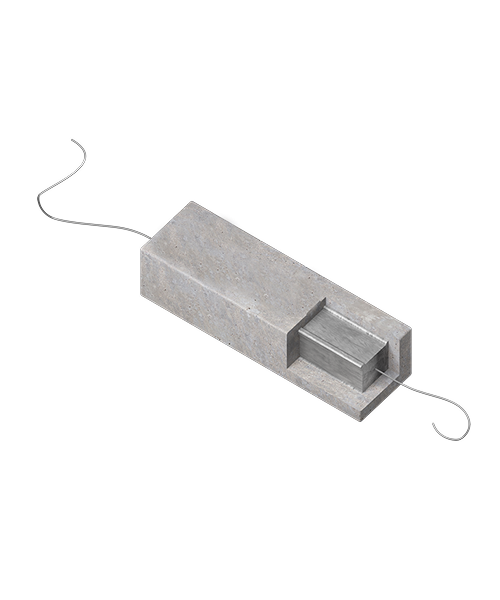
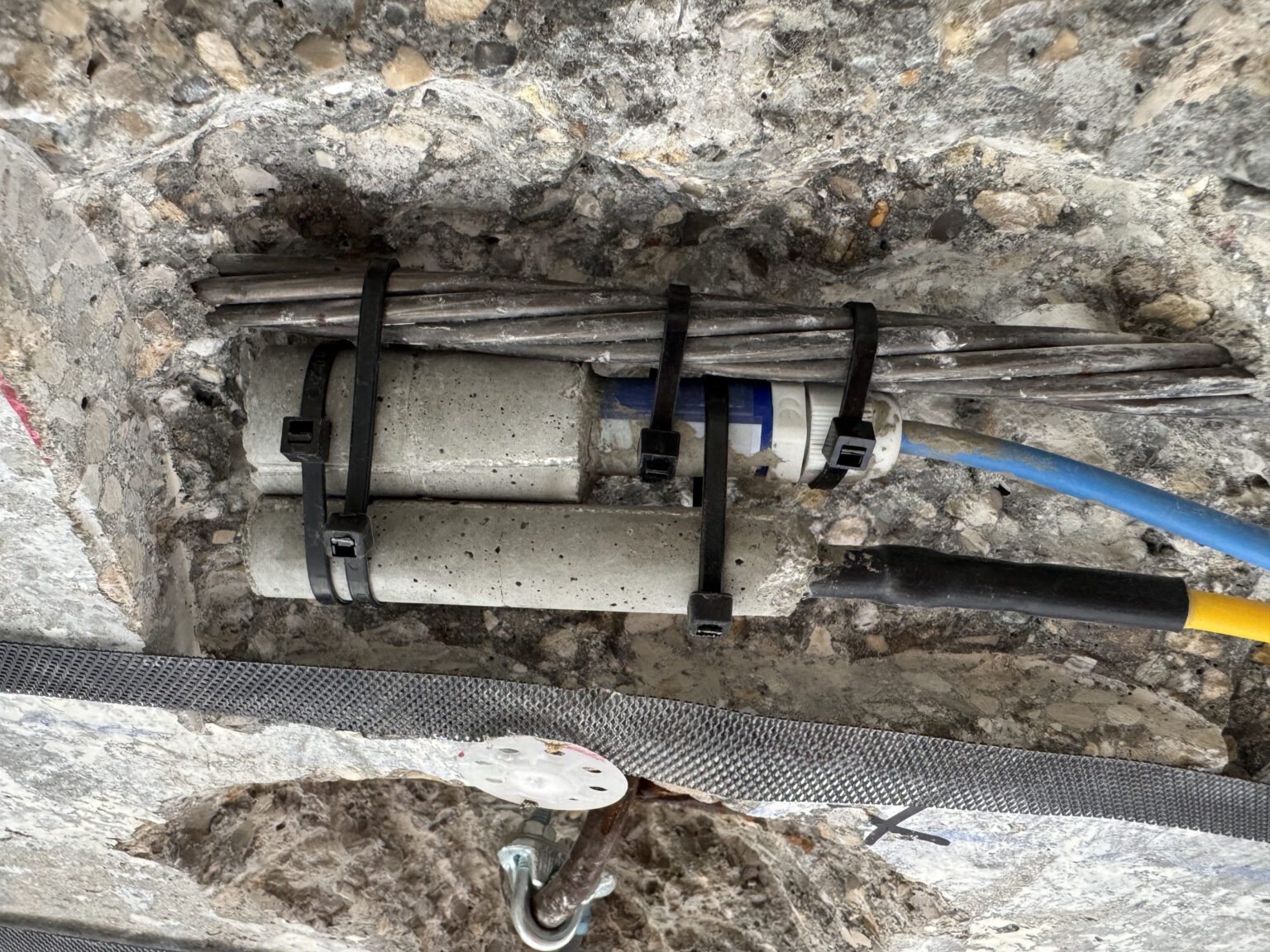
Tied anodes are high-purity zinc sacrificial anodes with a hexagonal cross-section, pre-encased in a cementitious mortar with a high alkaline reserve. They are tied directly to the rebar during spot repairs to concrete, without the need for an electrical power source or wiring.

Designed for use in localized repairs, they ensure the durability of the repairs for at least 10 years by neutralizing the risk of induced anode corrosion—a mechanism whereby an unprotected repair accelerates corrosion in adjacent areas.

Key benefits

Active protection as soon as it is placed in the concrete

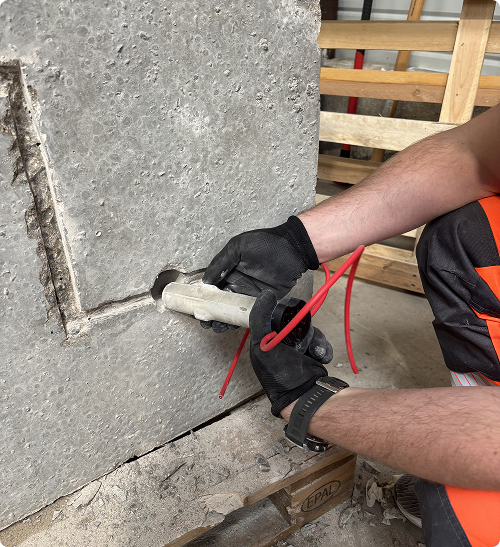
Easy installation by tying to the rebar

No power supply or wiring required

High inrush current due to the hexagonal cross-section

Prevention of anode-induced phenomena and corrosion in adjacent areas

Ensuring that localized repairs last for at least 10 years

Applications

Spot repairs to reinforced concrete structures

Treatment of localized corrosion areas

Protection of reinforcement adjacent to concrete joints

Localized repairs to beams, columns, undersides, balconies, and other reinforced concrete structures

CharacteristicValue
Zinc mass250 g
Theoretical capacity820 A·h/kg
Encapsulation mortarCementitious with high alkaline reserve
Mortar resistivity< 10 Ω·m
Service lifeAt least 10 years

Download the technical data sheet

Monitored anodes

Galvanic cathodic protection of areas, in accordance with EN ISO 12696 and NACE SP0290

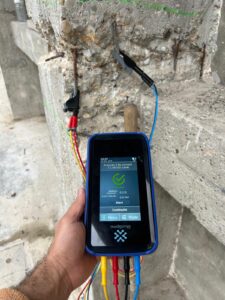
BlueSpine monitored anodes are sacrificial zinc anodes activated by a pre-applied coating of lithium-enriched mortar. Installed in boreholes and connected in series within the same anodic zone, they provide galvanic protection for the reinforcement and enable continuous monitoring of the system’s performance.

Monitoring is performed using reference electrodes and depolarization probes connected to a data acquisition system. Data is collected remotely to continuously verify the level of protection for the reinforcing bars, in accordance with the requirements of EN ISO 12696 and NACE SP0290.

Key benefits

Galvanic protection of corroded reinforcements

Continuous monitoring of system performance

Remote verification of the protection level of the reinforcement

Automated acquisition of potential and depolarization data

Available in several sizes to match the zinc coating weight to the structure's geometry and the severity of corrosion

Compliance with EN ISO 12696 and NACE SP0290 standards

Proven track record spanning 20 years

Applications

Treatment of areas affected by diffuse carbonation corrosion

Monitored galvanic cathodic protection of reinforced concrete structures

Long-term monitoring of the protection system's performance

Typical applications: beams, columns, walls, soffits, rafters, and other reinforced concrete elements

FeatureValue
Mortar activationLithium-enriched
MonitoringIntegrated
Service lifeAt least 20 years
Operating temperature−10 °C to +50 °C
ComplianceEN ISO 12696 / NACE SP0290

Download the technical data sheet

Why choose BlueSpine sacrificial anodes?

P1

Protection of the armatures without an external power source or periodic maintenance

The galvanic current is generated by the natural electrochemical reaction between the zinc and the steel reinforcing bars. No connection to the power grid, no power cables. Protection is active as soon as the system is installed in the concrete.

P2

Localized repairs must last for at least 10 years

When used in conjunction with localized repairs, ligated anodes ensure that structural repairs will last for at least 10 years. They eliminate the risk of induced corrosion and significantly slow the progression of residual corrosion in the treated areas.

P3

Adjusting the level of protection to the structure's needs

Strung anodes meet the need for localized repairs without the need for dedicated wiring or drilling. Monitored anodes provide a longer-term protection system. They offer continuous monitoring in accordance with standards for projects where the project owner requires traceability of the protection.

P4

Long-term control of active corrosion

Monitored anodes control active corrosion and prevent the formation of new corrosion sites over the service life of the structure. Continuous monitoring of protection parameters ensures compliance with regulatory requirements and allows for the early detection of any deviations before they affect the structure.
In the BlueSpine line

Galvanic anodes are part of a comprehensive ecosystem.

Neurona: remote monitoring

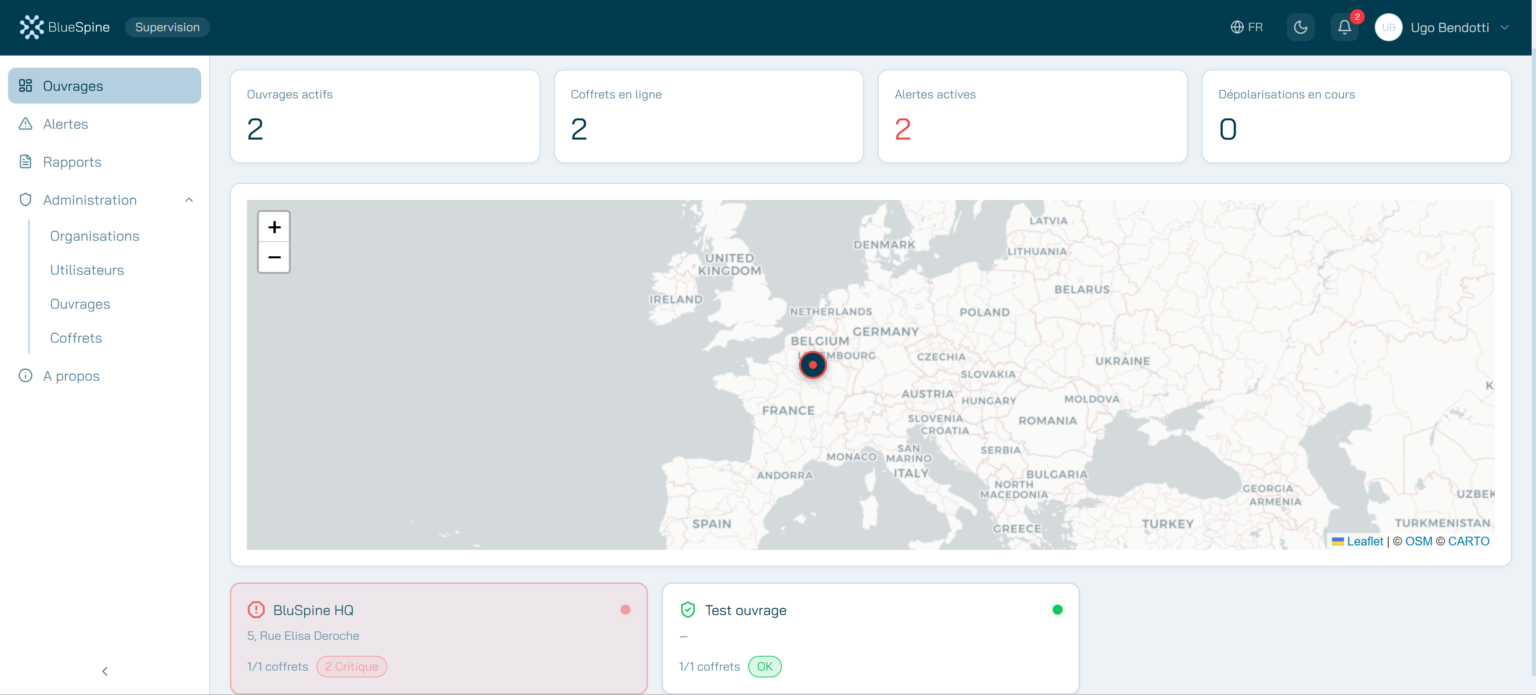
The Neurona platform provides remote monitoring of the facilities under supervision: real-time viewing of protection data, alert management, archiving, and centralized monitoring of a portfolio of structures from a single access point.

→ Discover Neurona

Measurement sensors

BlueSpine sensors (reference electrodes and depolarization probes) are integrated into the anodic zones to continuously measure the protective potentials. Their number and placement are determined during system design.

→ Learn about sensors

Q-Box: quality control

The BlueSpine Q-Box is the multi-parameter quality control tool used during the installation and provisional commissioning of the system.

→ Discover the Q-Box

FAQ

Your questions, our answers

What is the difference between ligated anodes and monitored anodes?

Ligated anodes are designed to support localized repairs and ensure their long-term durability. Monitored anodes constitute a fully-fledged galvanic cathodic protection system: the integrated monitoring system allows for continuous verification of the protection level and generates the documentation required by current cathodic protection standards. This traceability ensures greater reliability and a demonstrable service life of 20 years, whereas tied anodes are effective for 10-year periods without supervision.

Furthermore, while ligated anodes, as their name suggests, are installed only within repair areas, monitored anodes can be installed in boreholes outside of repair areas. This more widespread installation helps prevent the emergence of new corrosion sites and spares the facility manager the need for additional repair campaigns.

Yes. The system design (number of anodes, spacing, weight per unit area, and definition of anode zones) is carried out by a design office or a certified engineer in accordance with the EN ISO 15257 standard or an equivalent international standard. BlueSpine provides the technical data sheets, electrochemical characteristics, and data necessary for system design.

Repairs performed without cathodic protection carry a high risk of recurrence: the induced anode effect causes the repaired area to deteriorate in less than 5 years. Incorporating anodes during repairs significantly extends the service life of the repair and reduces the frequency of repair cycles over the long term. The additional installation cost is generally low relative to the structure’s overall life-cycle cost.

Talk to a BlueSpine expert

Reading maps, interpreting results, and guiding further investigations: BlueSpine experts assist engineering firms and diagnostic specialists in analyzing corrosion issues in reinforced concrete structures.

Discuter avec un expert