
A wide range of interventions, from preventive to curative
Cathodic protection is used as a preventive measure on new structures (with a lifespan of up to 100 years) and as a remedial measure on existing structures (with a lifespan ranging from 10 to over 50 years, depending on the solution chosen).
* The zinc anodes embedded in repair patches are not monitored and therefore do not strictly fall under the category of cathodic protection (as defined by EN ISO 12696). They are used to limit the induced anode effect around repaired areas; they should be reserved for small repairs and low levels of corrosion.
Download the white paper
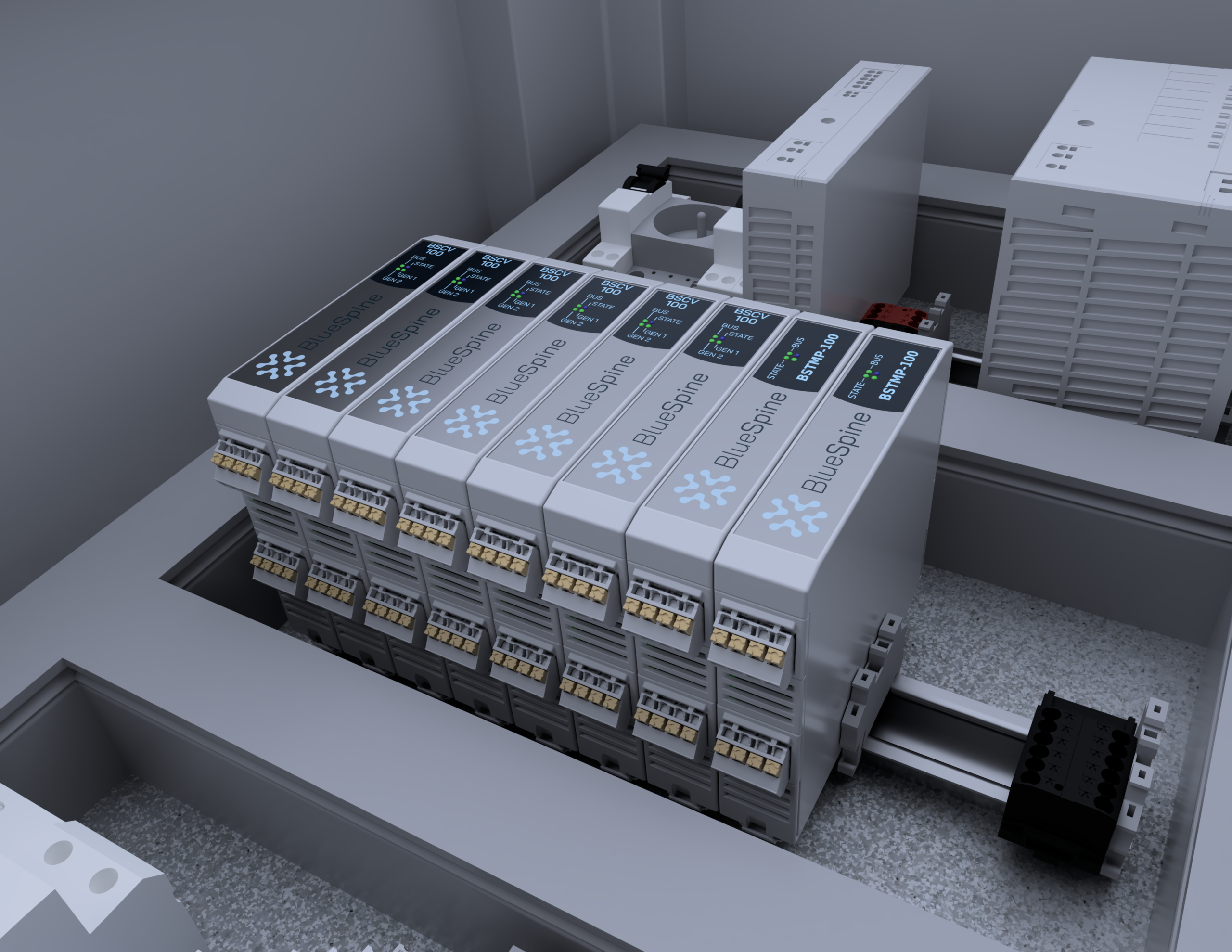
A comprehensive range of solutions for long-term corrosion protection
The PassCorr Certification Process
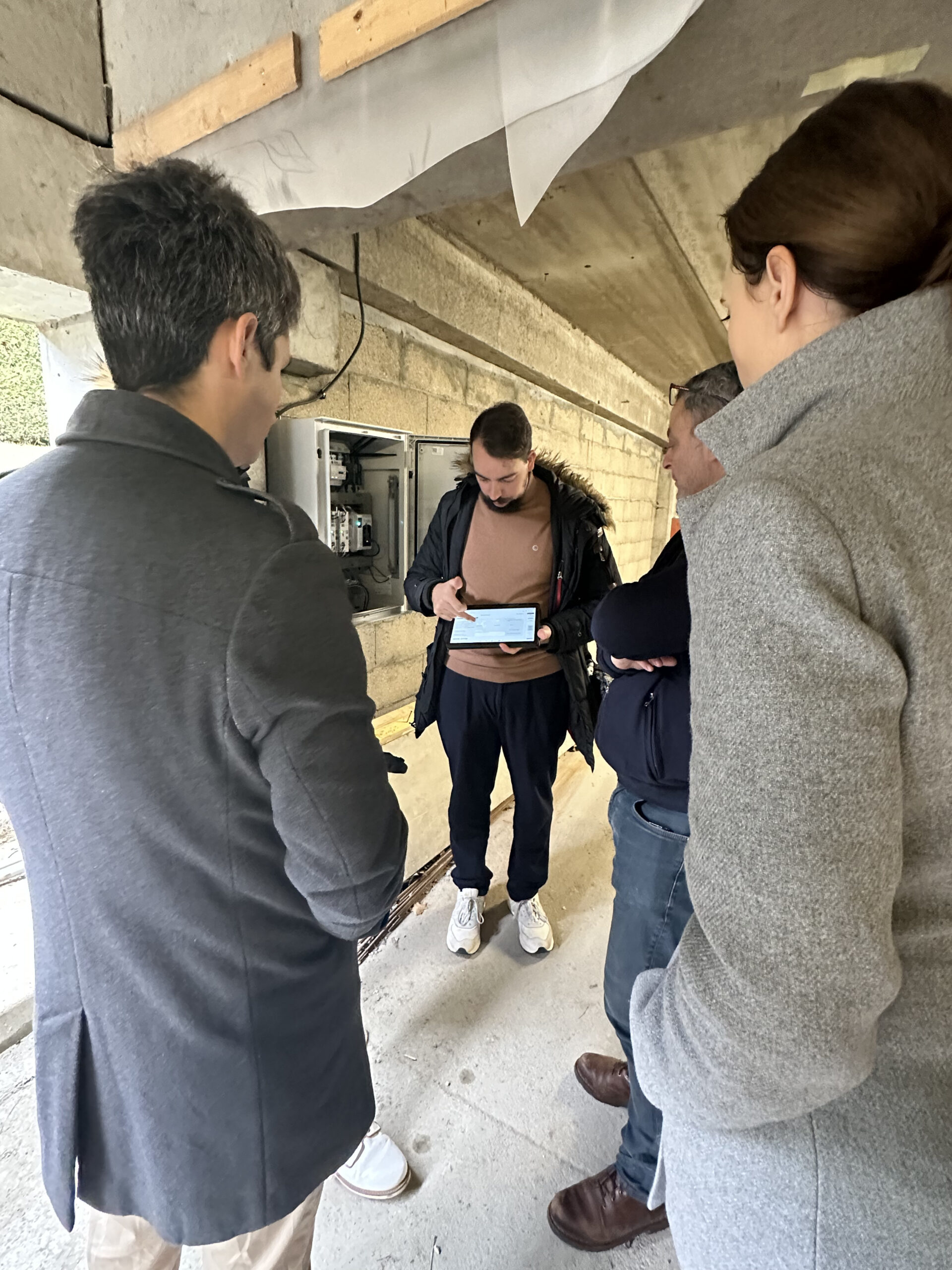

Technical support throughout the project
Cathodic protection: a complementary skill to your existing expertise
Are you already skilled in concrete repair, structural reinforcement, or waterproofing? Cathodic protection is the perfect complement to your existing skills. Installing anodes, connecting them to the rebar, and integrating sensors: these steps fit seamlessly into the workflow of a renovation project. Add a unique skill to your service offering without disrupting your current business.
Overview of the PassCorr Certification Process
The PassCorr Certification Program is a training course designed for companies in the building and construction and civil engineering sectors. It provides you with the expertise, tools, and technical support needed to incorporate cathodic protection into your service offerings and position yourself in a rapidly growing renovation market.
2 modules
Flexible format
Scheduled according to your project timeline
Prerequisites: Construction or civil engineering contractor.
Note on complementarity with certification programs:
The PassCorr certification complements the individual EN ISO 15257 certification tracks (Levels 1 through 5) in Europe and the AMPP CP1 through CP4 tracks in North America. It provides you with the operational prerequisites (understanding of structural defects, familiarity with BlueSpine equipment, and construction site methodology) that facilitate the preparation for and successful completion of individual certifications.
A rapidly growing renovation market
Corrosion affects all industries and all types of structures. Concrete is everywhere. In nearly 80% of cases, it is the first sign of deterioration to appear on damaged structures. Today, few renovation or construction companies include cathodic protection in their services: this is an accessible and unique market opportunity worth pursuing.
A quick return on investment in skills development
In just three days of training, your sales and construction teams will be up and running with cathodic protection. This is a manageable investment, backed by BlueSpine’s support in identifying opportunities, cost estimation, and the implementation of your first project.
A comprehensive program
With PassCorr 1, your sales representatives learn how to identify opportunities within your network of project owners and general contractors, evaluate projects, and respond to a request for proposals.
With PassCorr 2, your construction teams master installation, quality control, and the mandatory first-year follow-up. You’re fully operational from cost estimation through commissioning.
The BlueSpine ecosystem at your disposal
Once your company is PassCorr-certified, it will join the BlueSpine Partner Club. You’ll gain access to:
• a dedicated professional portal
• regular technical updates
• monitoring tools
• ongoing technical support from our certified experts
• joint business development for projects you identify
Become a BlueSpine Partner
Impressed-Current Cathodic Protection (ICCP)
A direct current, supplied by a generator (BSCP-100 controller), flows continuously between inert anodes (made of titanium MMO or electroconductive carbon coating) and the reinforcements to be protected. The current is adjustable on a zone-by-zone basis, allowing for the management of geometric and exposure variations in the structure. You can precisely control the system and verify performance criteria across the entire structure.
Service life: 30 to 50 years, depending on the anodizing system used.
See impressed-current anodes
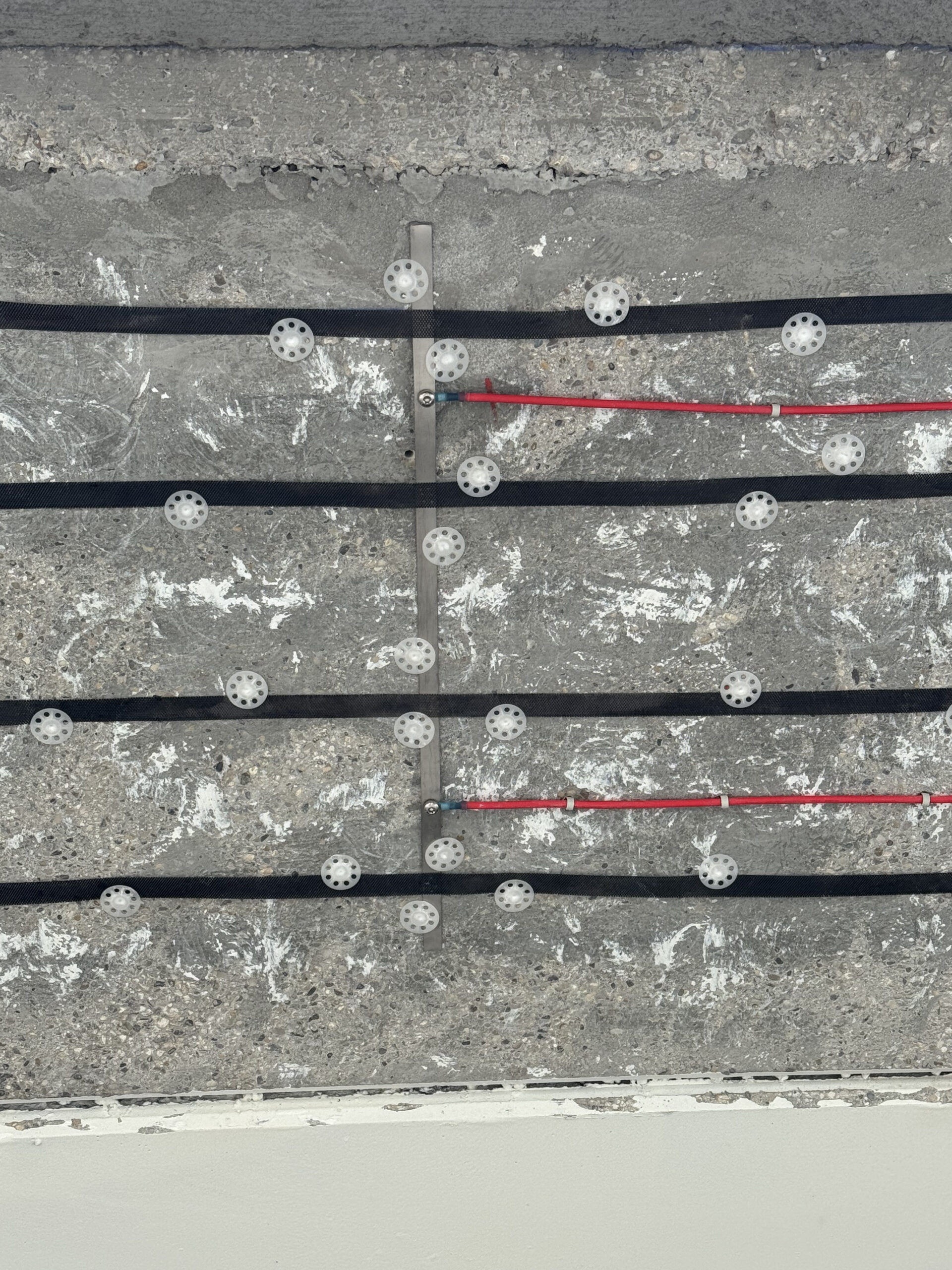
Galvanic Current Cathodic Protection (GCP)
Zinc sacrificial anodes generate a protective current without an external power source: the zinc oxidizes in place of the steel, thereby protecting it. This is a simple solution to install, particularly well-suited for isolated structures without access to electricity.
The galvanic family is divided into two categories: monitored galvanic anodes and ligated Zn anodes.
See galvanic anodes
Q-Box · Quality Control
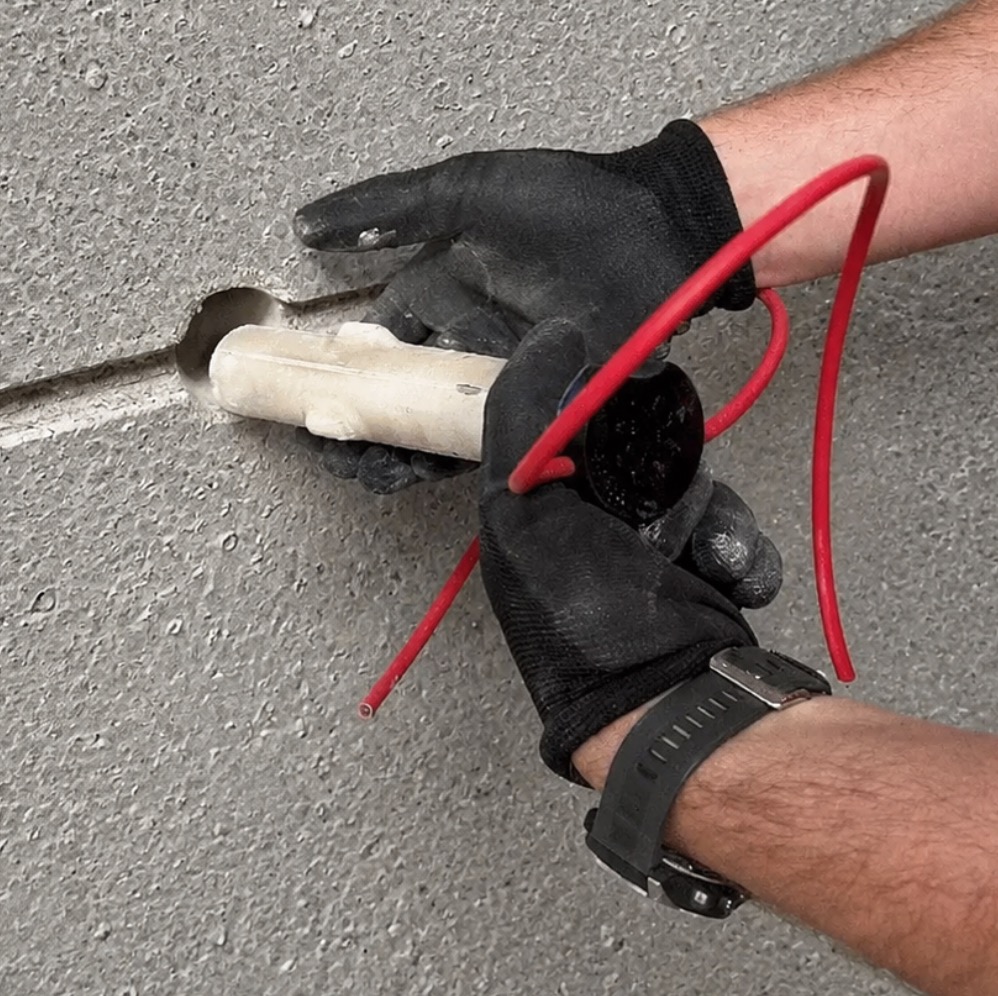
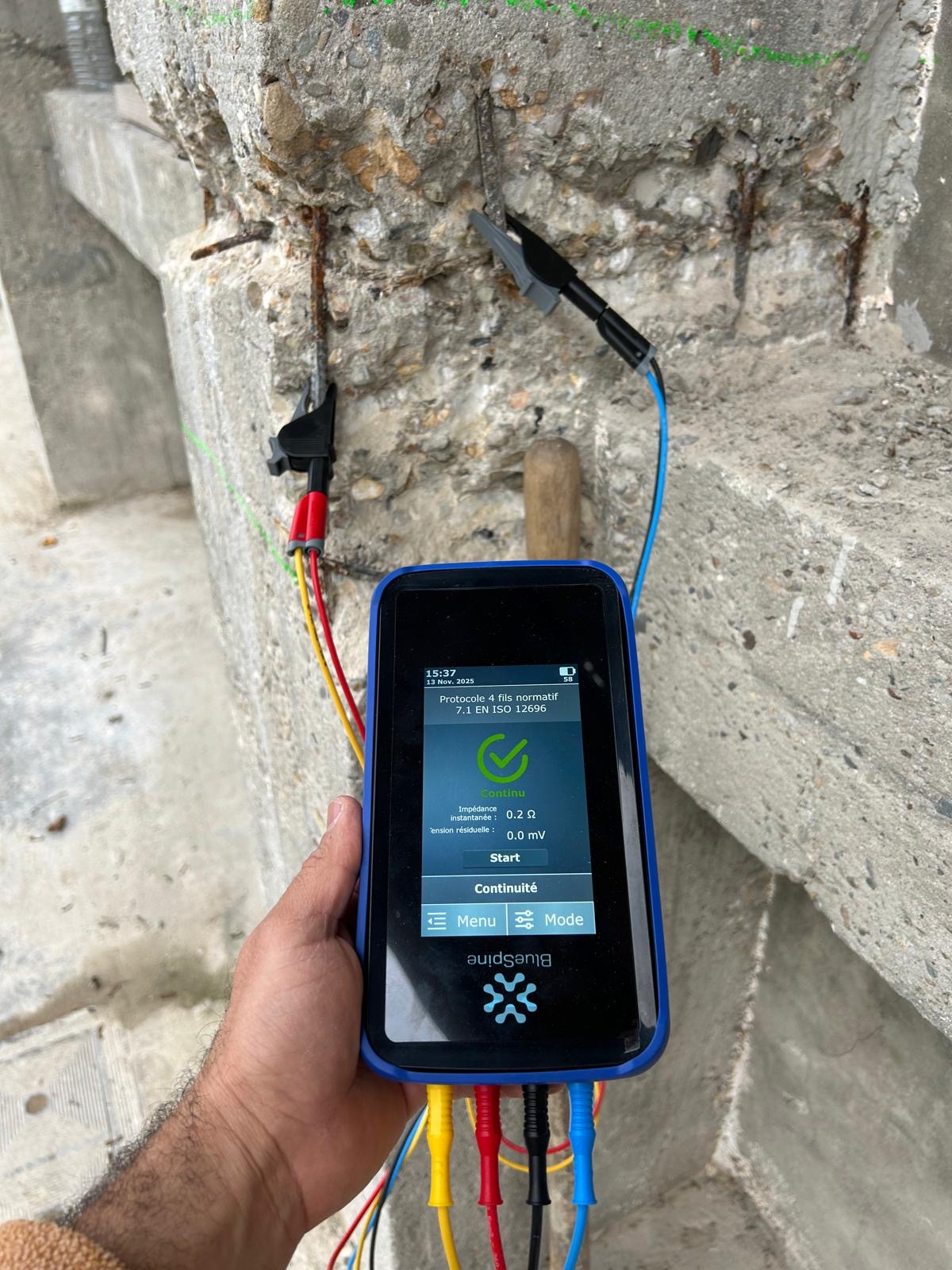
A multi-function testing device developed by BlueSpine for quality control at every stage of the construction project: electrical continuity testing, zone-by-zone provisional commissioning, and an automatically updated Quality Assurance Plan.
See the Q-Box
BSCP-100 Controllers · Modular Architecture
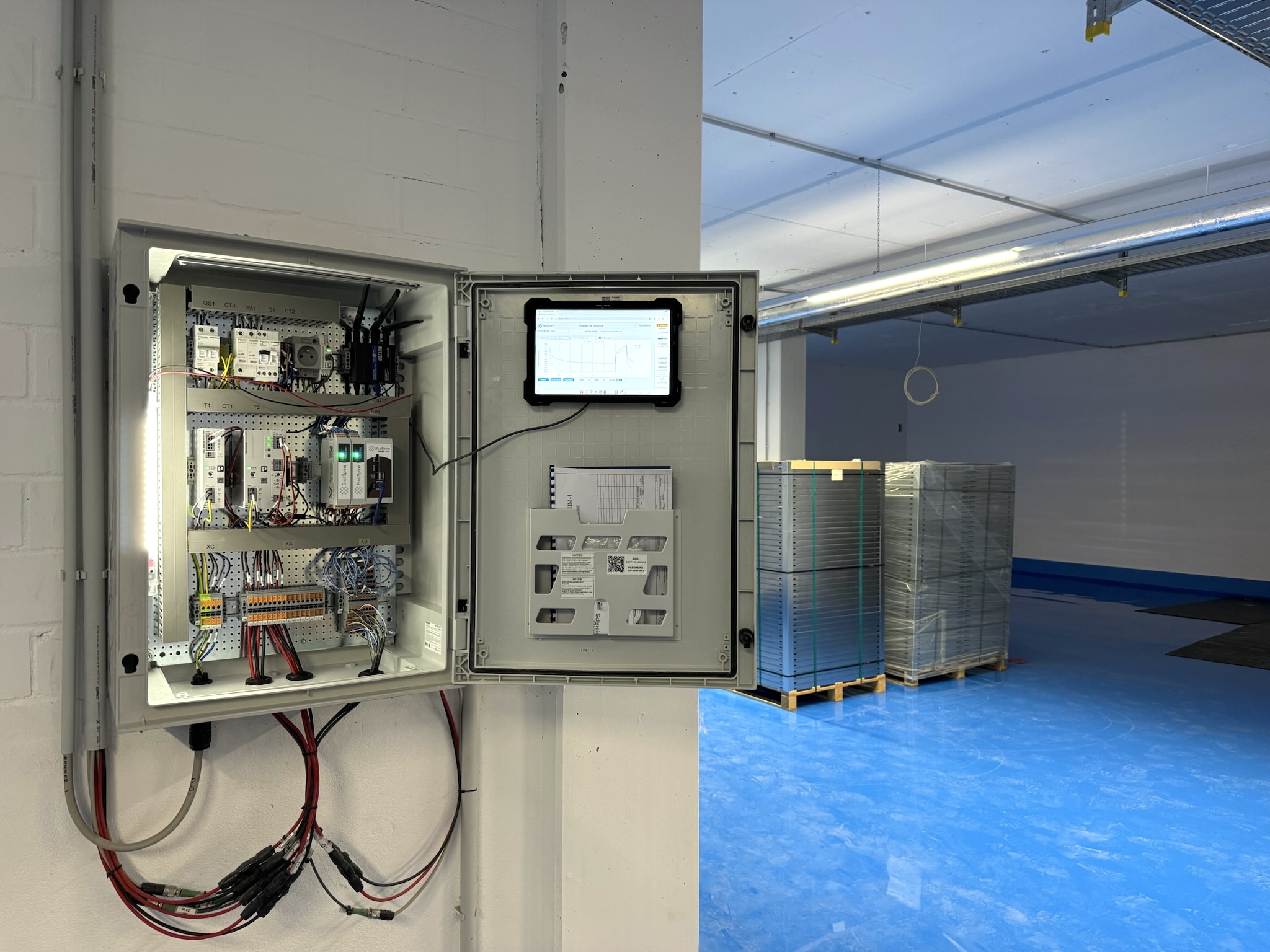
Cathodic protection controllers designed to regulate the injected current on a zone-by-zone basis. Their modular design adapts to any structure by allowing generators to be added as needed.
See the BSCP-100 controllers
Connectivity
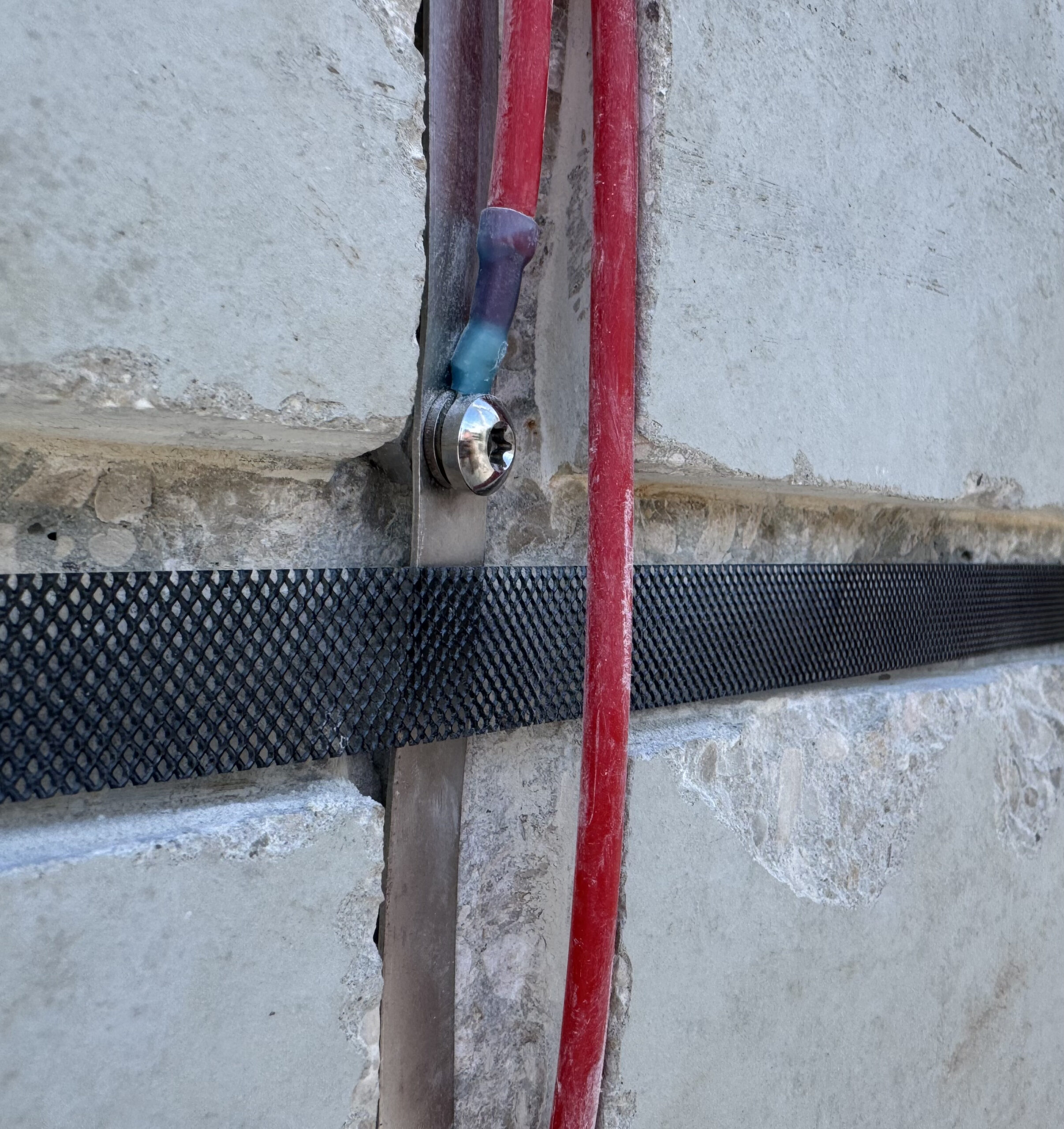
XLPE-XLPE cables, instrumented Smart Junction Boxes (IP66/IK10), and connection accessories for connecting anodes, controllers, and sensors.
See the connectors
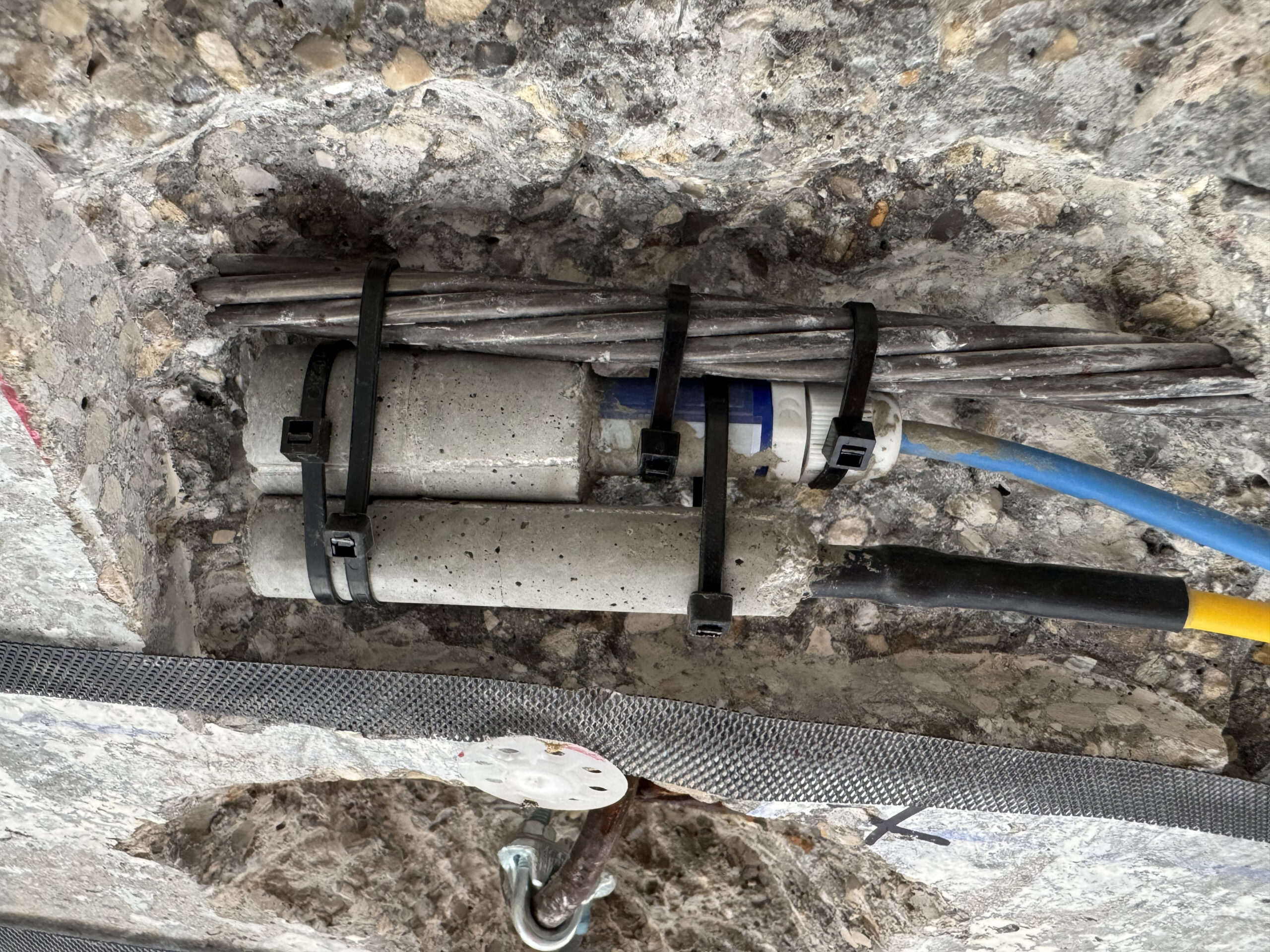
Sensors
Mn/MnO₂ reference electrodes, Ti MMO depolarization probes. Continuous verification of performance criteria in accordance with EN ISO 12696.
See sensors
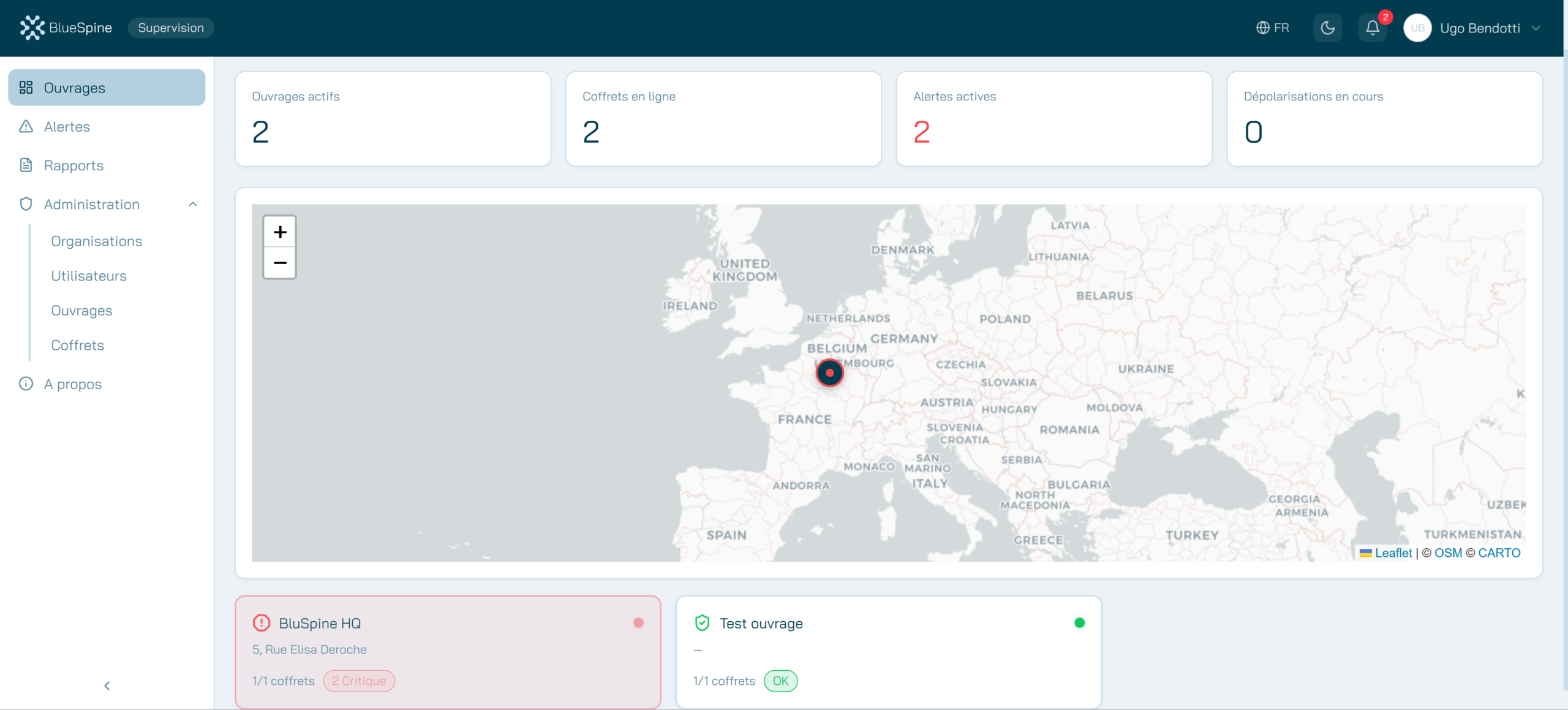
Neurona Platform
A remote control and monitoring interface: PLC control, tracking of EN ISO 12696 performance indicators, and automatic incident alerts for predictive maintenance.
View the platform
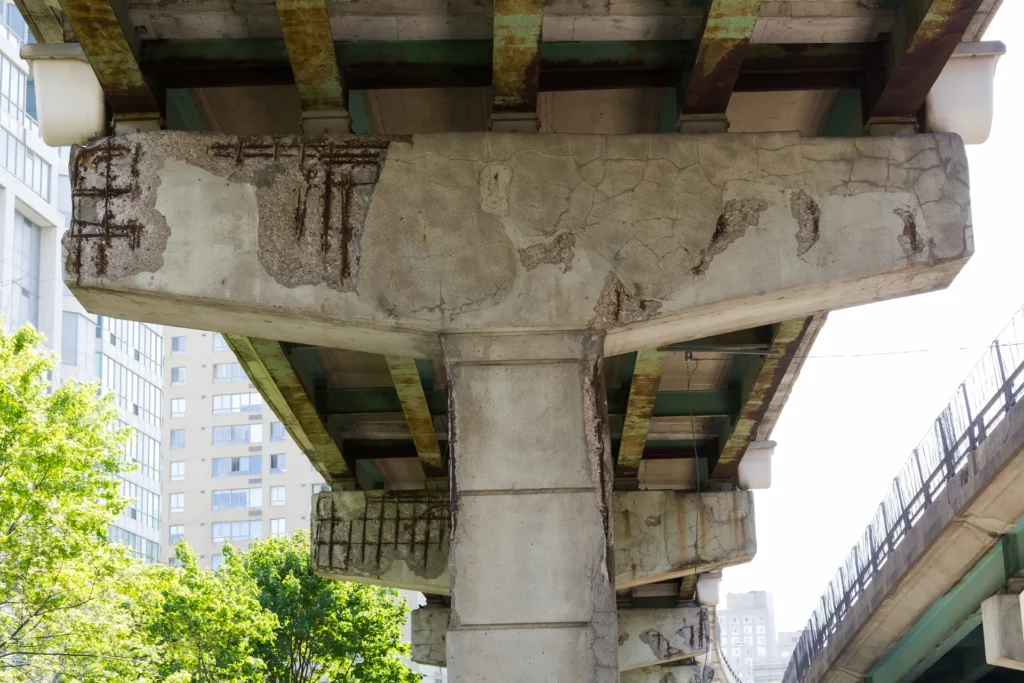
treated
lifespan
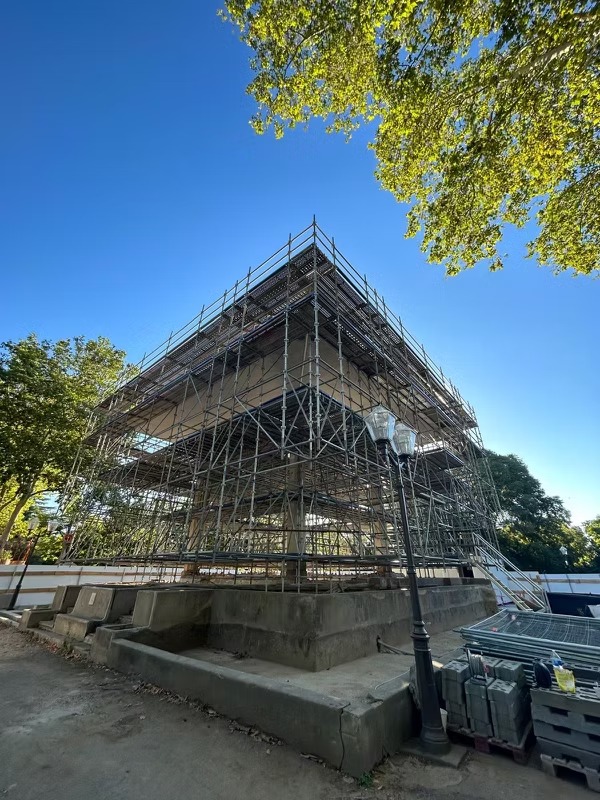
treated
lifespan
“The training started with the basics and provided an opportunity to discuss specific cathodic protection projects. Today, I use 50% of the knowledge I gained during the training, 30% of the materials provided, and 20% of the follow-up discussions with the BlueSpine team on a daily basis—support that helps me identify opportunities and promote the topic to engineering firms.”
- George H.
Partner construction company
February 2026
EN ISO 12696
Cathodic protection of steel in concrete (Europe).
EN ISO 15257
Competency levels and certification for cathodic protection personnel (Europe).
AMPP SP0290
Cathodic Protection of Reinforcing Steel in Atmospherically Exposed Concrete Structures (North America).
AMPP SP0408
Cathodic Protection of Reinforcing Steel in Buried or Submerged Concrete Structures (North America).
AMPP CP1 à CP4
Individual staff certifications (North America).
EN 1504
Products and systems for the protection and repair of reinforced concrete structures (as part of concrete rehabilitation).

Recommandation PCRA 013 (CEFRACOR, Dec. 2019)
Guidelines for supervision and subcontracting based on skill levels.