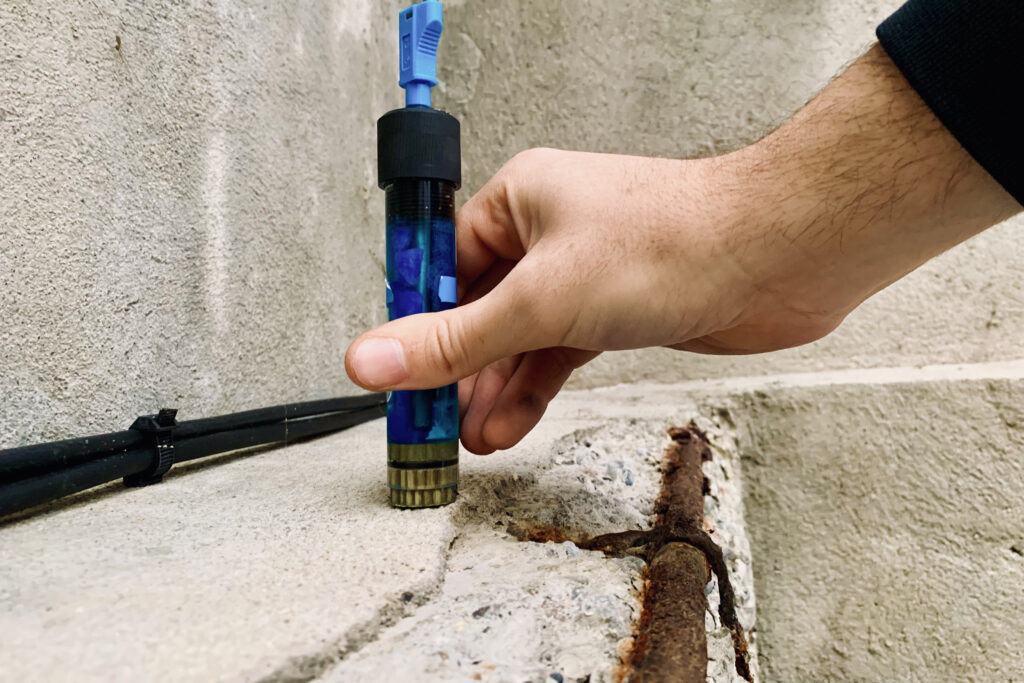
Corrosion diagnosis: identifying the problem before prescribing a solution

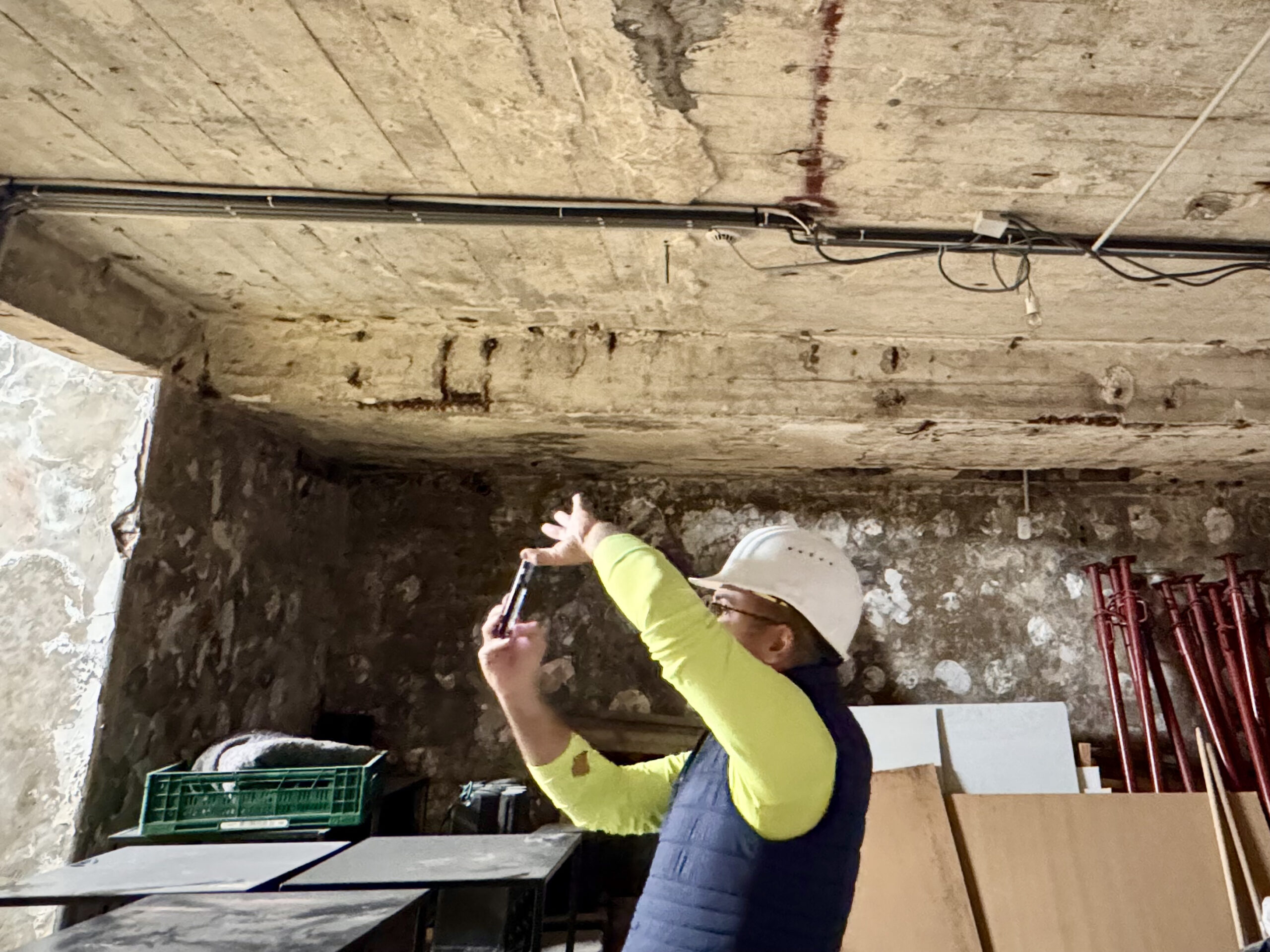
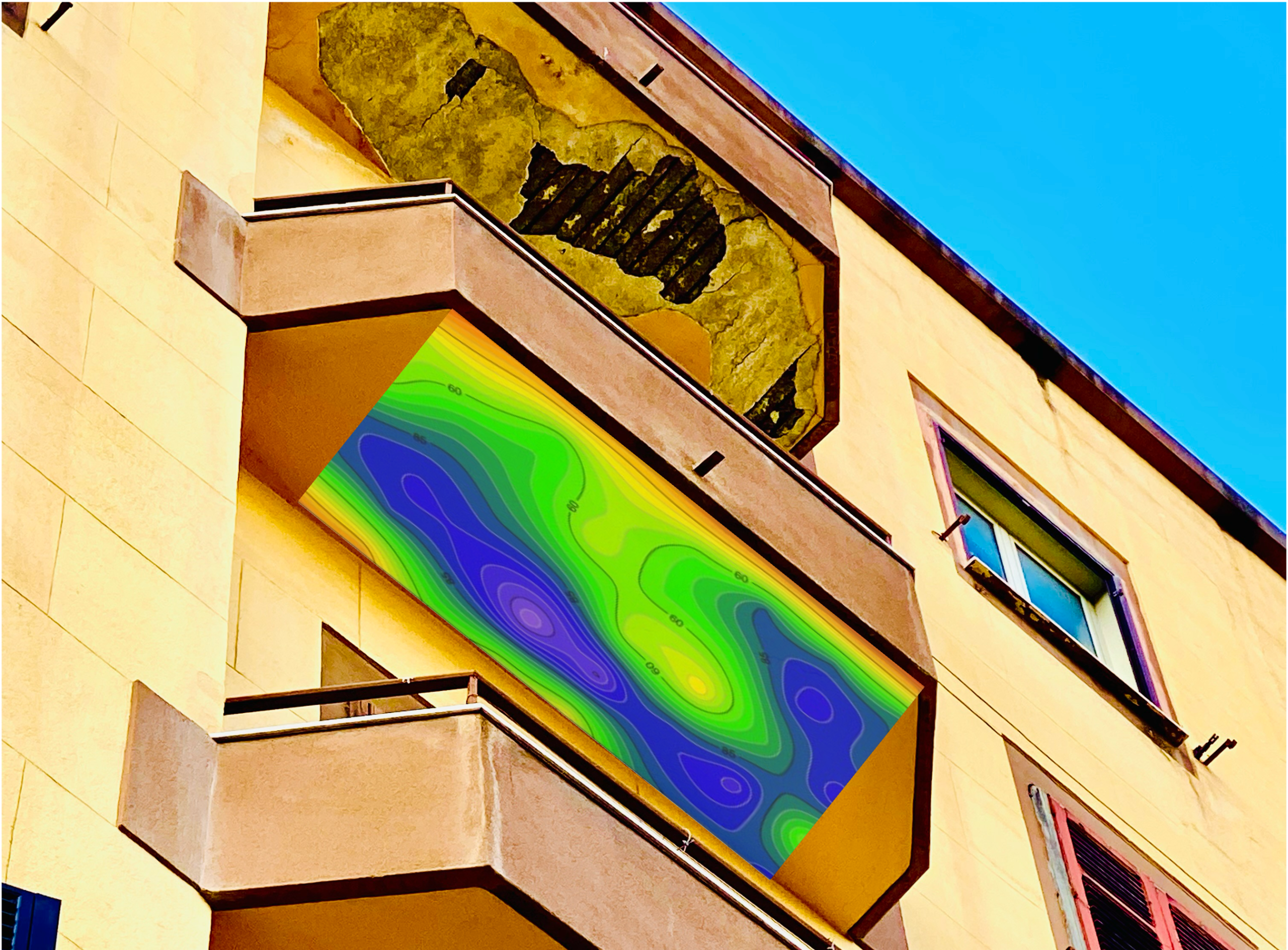
Cracks, rust streaks, or spalling concrete indicate corrosion that is already advanced. The real challenge lies in areas that appear sound, where the damage can progress for years without any visible signs. Corrosion assessment detects this invisible activity, determines the extent of the damage, and guides the treatment to be implemented.

BlueSpine provides engineering firms and diagnosticians with the tools, training, and technical support needed to conduct a thorough corrosion diagnosis. This expertise complements structural diagnostics, extending the analysis to identify the actual cause of the damage.

Download the diagnostic guide

Accurately diagnosing corrosion

No single measure is sufficient on its own to identify a condition. The diagnosis of corrosion is based on the combination of several investigations

01

Monitoring of disturbances

02

Structural recognition

03

Non-destructive corrosion testing

04

Samples for laboratory analysis

05

Localized destructive testing to confirm the findings of the measurements
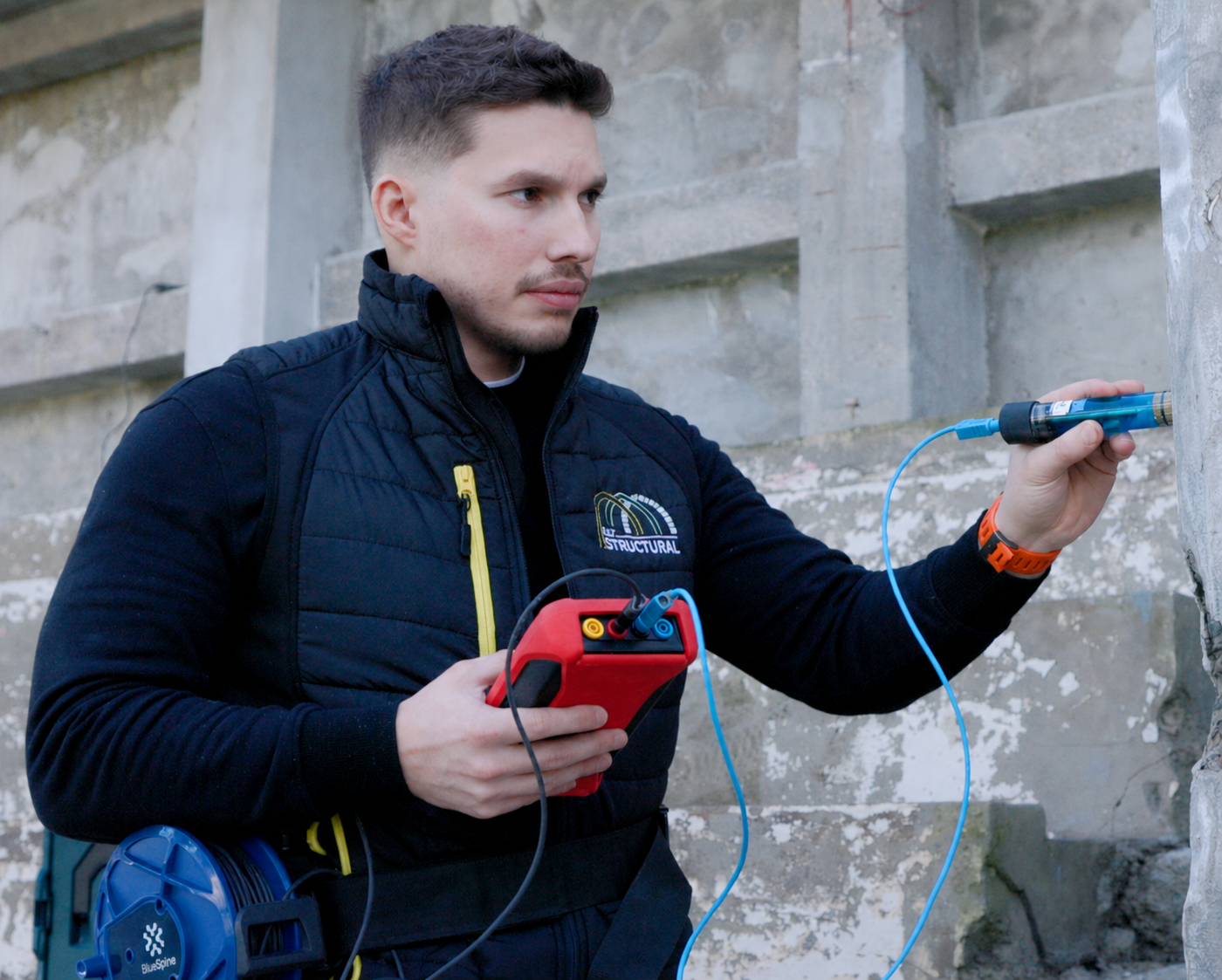
It is this body of evidence that forms the basis for the conclusion. BlueSpine provides the monitoring tools, analysis software, and training needed to support this process.

Pillar 1: BlueSpine corrosion diagnostic tools

The system is based on a multi-measurement diagnostic unit compatible with a wide range of specialized probes. It natively includes:

  • potential measurement, which allows for the detection of corrosion even in areas that appear sound;
  • electrical continuity testing of the reinforcement, which is essential for the proper functioning of cathodic protection.

New probes will gradually expand the measurement capabilities, all connected to the same unit and accompanied by updates to the analysis software.

A sampling kit completes the system to characterize the level of concrete contamination (carbonation, chlorides).

Designed and manufactured in France, BlueSpine’s hardware and software are engineered for field use, the productivity of diagnostic campaigns, and the level of precision required by a pathology as complex as corrosion.

Pillar 2: The PassDiag training course to build expertise in corrosion diagnosis

The PassDiag training program is a skills-building course on corrosion diagnosis. It consists of two parts:

  • one day of theory;
  • one day of hands-on practice on an actual structure (ideally one of your current diagnostic projects).

It is designed and led by BlueSpine’s corrosion experts, who combine academic experience (dissertation work, scientific publications) with hands-on experience gained on a wide range of structures. This expertise complements the structural diagnostic work of engineering firms and diagnosticians.

Pillar 3: Technical support for reviewing reports

BlueSpine provides technical support in interpreting results and guiding any further investigations, without replacing the prescribing physician’s role. We assist project managers and engineering firms in drafting their own reports or interpreting those prepared by third parties. This support accompanies the project from the initial field survey through to the final decision.

Understanding Corrosion Diagnosis: A Step-by-Step Guide

What is a corrosion assessment?

Understanding corrosion through a series of clues

A corrosion assessment is based on four overlapping categories of investigation:

  • visual inspection for signs of corrosion;
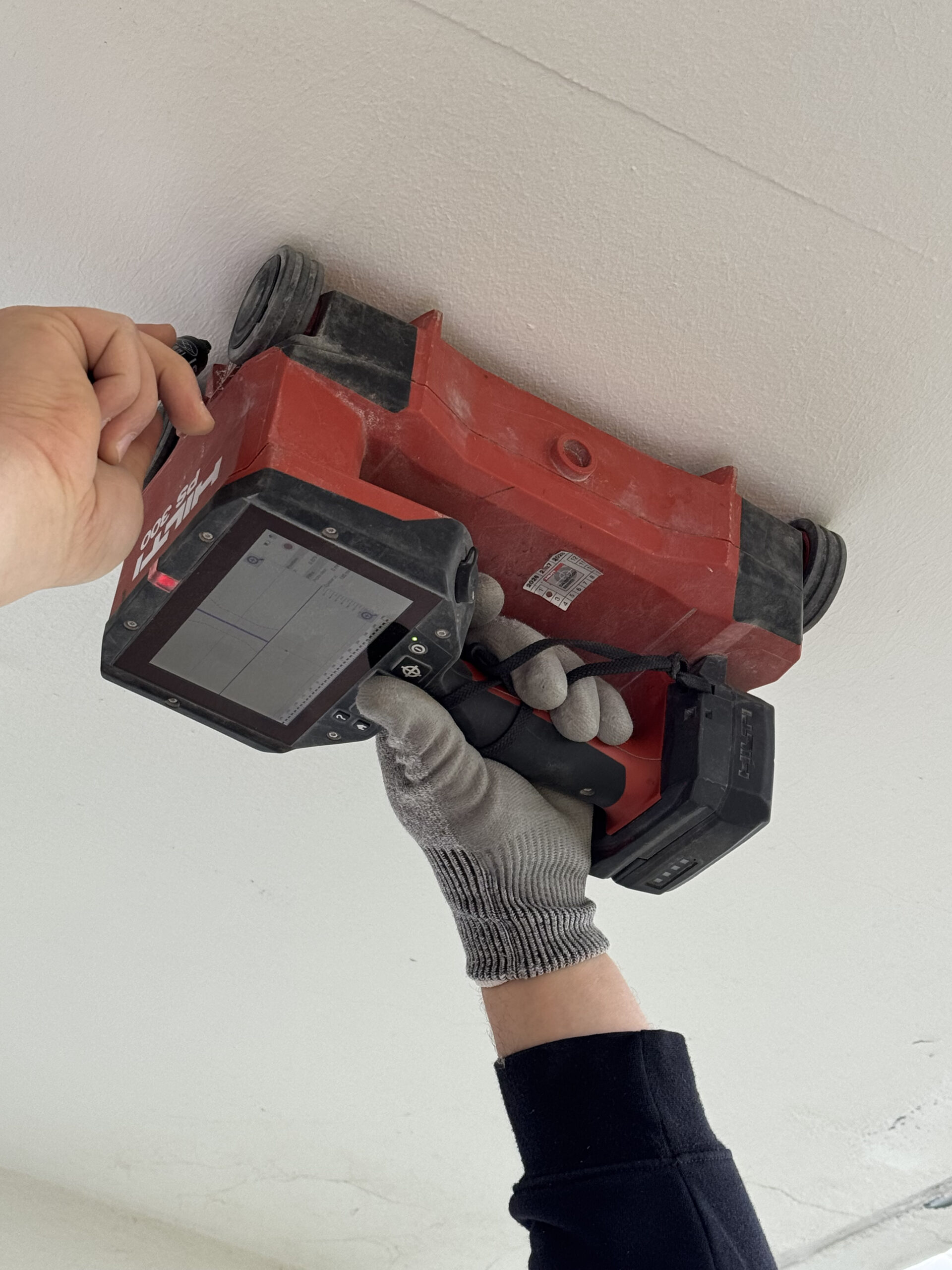
  • structural assessment (thickness gauge or radar, localized probing to confirm concrete cover and reinforcement density);
  • non-destructive electrical and electrochemical measurements (e.g., potential and gradient mapping, concrete resistivity, electrical continuity of reinforcement);
  • concrete samples for laboratory analysis (carbonation depth, chloride content).

Each indicator taken in isolation can be misleading. When considered together, they converge toward a clear characterization of the condition: nature, extent, and activity.

The value of BlueSpine tools lies precisely in complementing conventional structural diagnostics, which often focus on the consequences rather than on an analysis of the condition itself.

Seeing the Invisible: Detecting Corrosion Before Damage Occurs

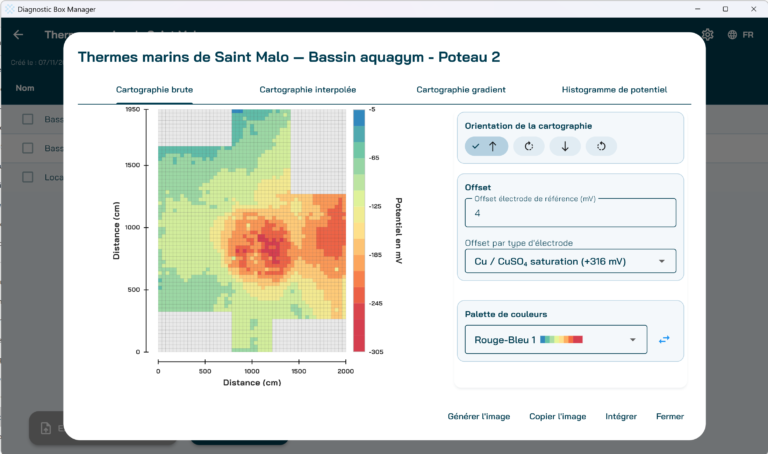
The main focus of the assessment is not on areas that are already damaged, where corrosion is evident and a visual inspection is sufficient. Rather, it is on areas that appear sound, where corrosion may have begun long ago without any visible signs. Non-destructive testing reveals this corrosion activity that is invisible to the naked eye. For example, potential and gradient mapping identifies active areas and guides the location of concrete samples that will confirm or rule out the onset of corrosion. This is what allows us to define the actual extent of the damage.

Reduce the scope of the work through a targeted assessment

This clarification changes the project manager’s decision. Too many assessments conclude that there is widespread damage and require renovations that exceed the budget. An assessment conducted on a zone-by-zone basis identifies the actual condition of each area and allows for the exclusion of unaffected zones from the scope of work, thereby reducing the total cost of the project.

Understanding corrosion diagnosis: a step-by-step guide

The BlueSpine corrosion diagnostic unit

Multiple measures

Real-time analysis

Dedicated software

Made in France
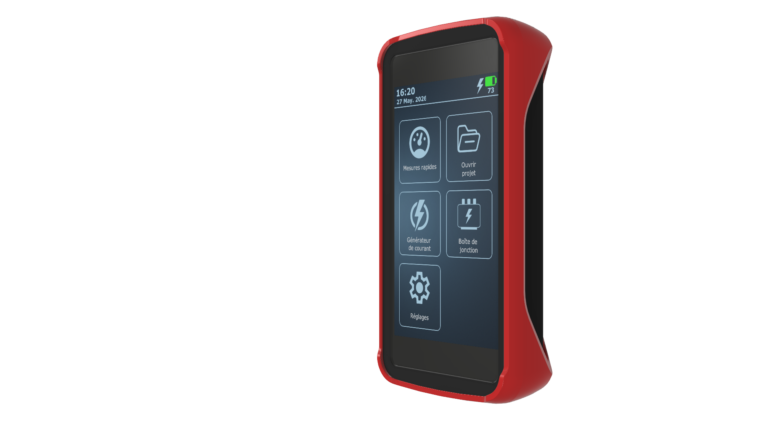
The BlueSpine diagnostic unit centralizes the measurements required for on-site corrosion diagnostic campaigns. Connected to various specialized probes, it enables the performance of the primary non-destructive tests used to assess corrosion activity in reinforced concrete.

The system notably covers potential measurements, potential and gradient mapping, as well as electrical continuity testing of reinforcement in accordance with EN ISO 12696.

Designed as a scalable platform, the unit will gradually integrate other measurements such as concrete resistivity and corrosion rate.

The readings are processed in real time by the BlueSpine analysis software, which assists the diagnostician and facilitates the generation of the diagnostic report.

01

Accuracy and reliability

The system is based on industry standards (EN ISO 12696, EN 1504, ASTM C876, RILEM TC 154-EMC) and the latest scientific advances in non-destructive corrosion measurement. The readings are fully traceable and incorporated into a diagnostic report that is documented on a zone-by-zone basis.

02

Productivity on the construction site

A traditional diagnostic campaign involves numerous tools and generates a significant amount of follow-up work in the office. The BlueSpine device assists the operator directly on-site through on-device analysis and structured reporting of measurements.The maps are used in real time to guide sampling, minimize the need for return trips to the site, and allow the operator to leave the job site with a pre-filled report.

03

Field ergonomics

Waterproof, shock-resistant, and able to withstand temperature fluctuations, and rechargeable via a power bank during operations: the BlueSpine case is designed for real-world field conditions. It can be operated with one hand, worn on a belt, and features a touchscreen that is readable in direct sunlight.

04

BlueSpine's expertise at your fingertips

Designed by experts in concrete structure pathology, this device brings their methods and high standards to the field, supporting your teams.
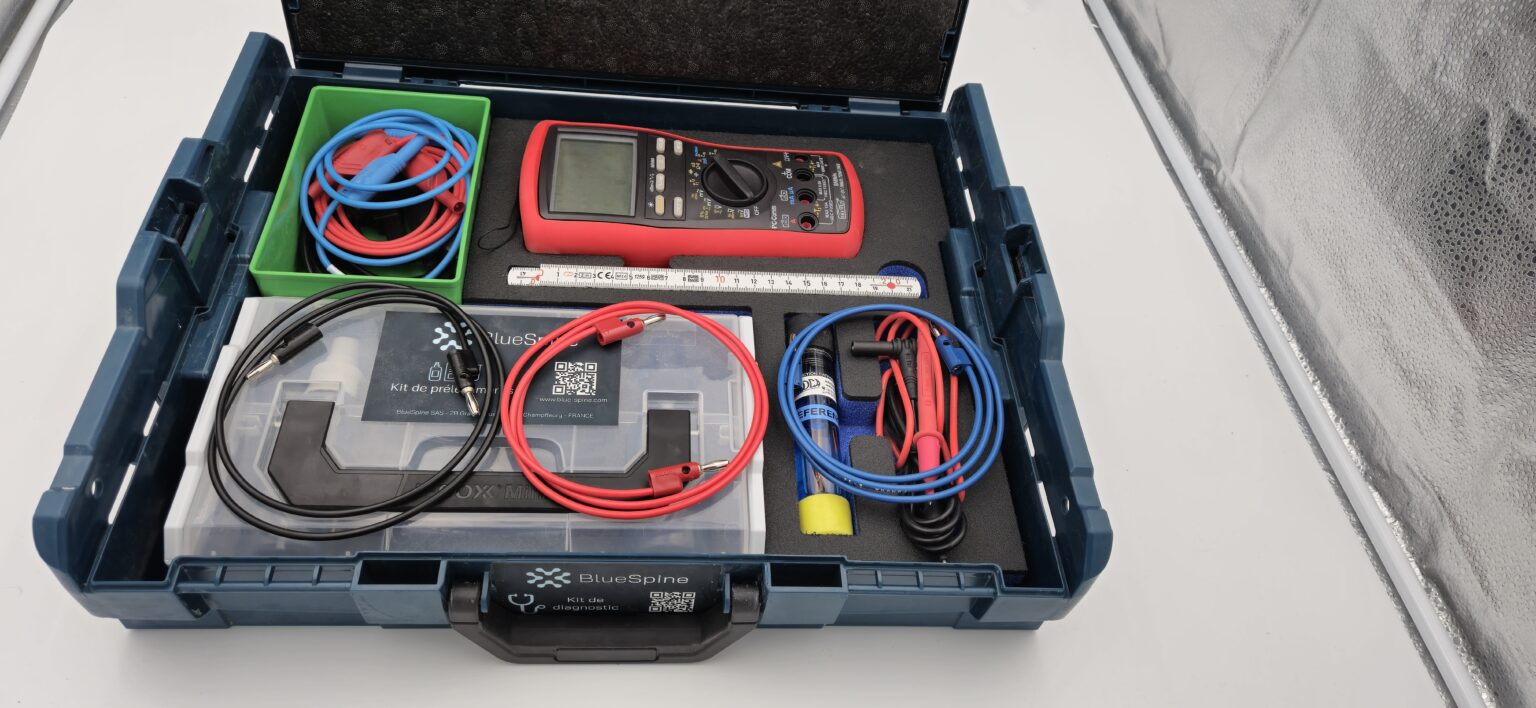
A ready-to-use specimen collection kit

All your camping gear in one kit

The sampling kit complements the diagnostic unit and contains all the equipment needed for potential mapping and concrete characterization campaigns: reference electrodes, cabling, thymol phthalein for carbonation tests, and chloride sampling vials for laboratory analysis.
The entire set is housed in an ABS L-Boxx case designed to withstand on-site conditions.

Explore the diagnostic unit

Areas of application

All sectors

Buildings and Public Access Buildings

See the cases

Engineering structures

See the cases

Historic Landmarks

See the cases

Industrial and energy infrastructure

See the cases
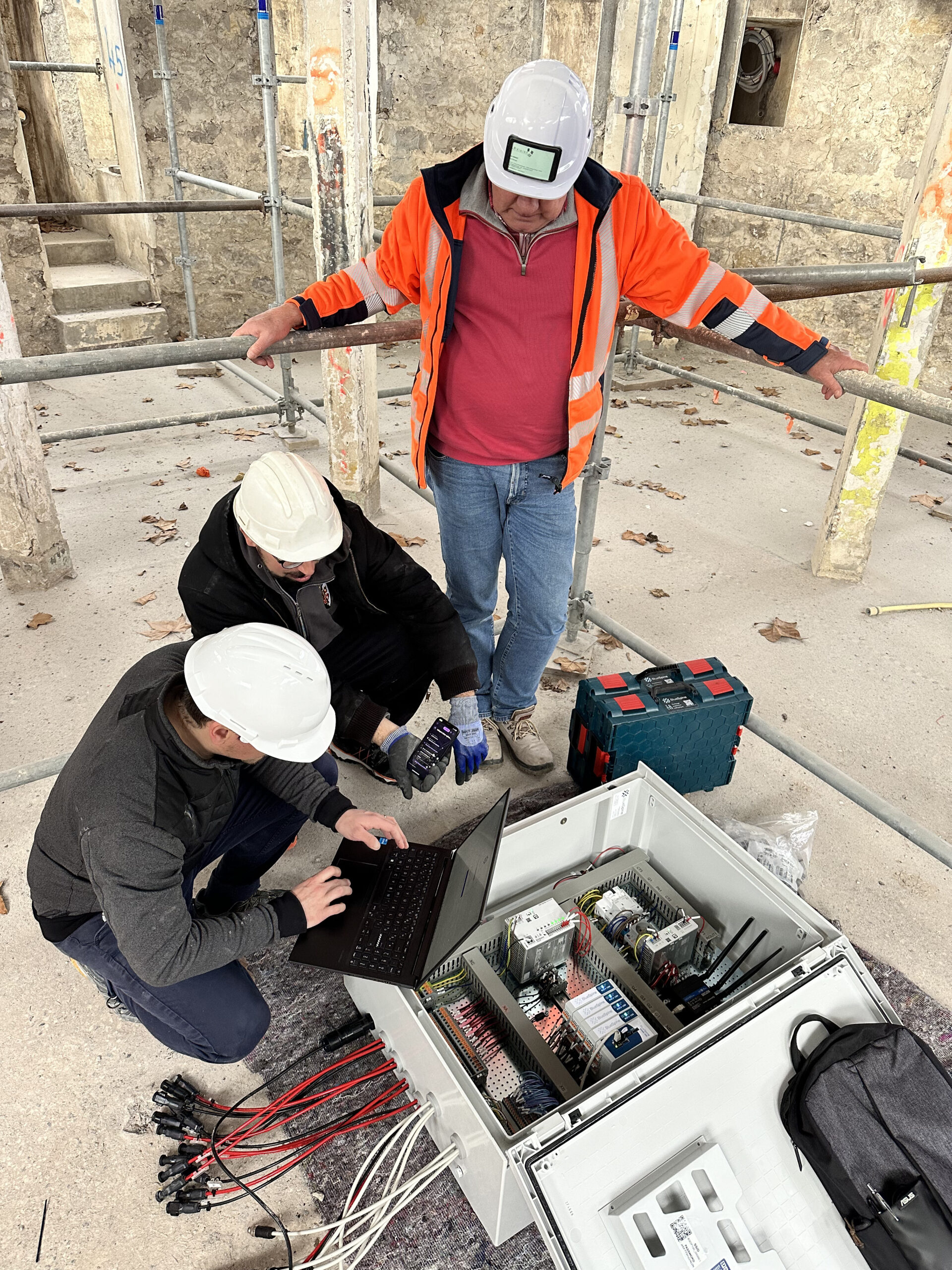
Expertise tailored to your projects and goals

PassDiag: train your teams in corrosion diagnosis

For engineering firms and diagnostic service providers

PassDiag is BlueSpine’s professional development program focused on diagnosing corrosion of reinforcing bars in reinforced and prestressed concrete. It is designed and led by BlueSpine’s corrosion experts, who bring academic expertise and experience gained from working on a wide range of structures. Gain the skills to enhance your structural diagnostics practice: identifying defects, selecting appropriate investigative methods, and formulating recommendations.

A two-part training program in corrosion diagnosis

  • Day 1: At your facility, at BlueSpine, or at any other suitable location, we’ll cover the theory behind identifying structural issues, planning investigations, analyzing the body of evidence, and formulating recommendations.
  • Day 2: Hands-on application on-site, on one of your current or upcoming diagnostic projects. A BlueSpine trainer will work alongside you to integrate the corrosion component into a structural assessment you have already scheduled (potential mapping, targeted sampling, on-site interpretation of results, and support during report writing).

The PassDiag program is designed for structural engineering firms and diagnostic specialists looking to expand their services to include corrosion diagnostics. The training is available as an optional add-on to a hardware package (diagnostic kit and BlueSpine diagnostic unit, now available for pre-order with delivery starting in the fourth quarter of 2026).

It has also been designed for engineering firms that prepare specifications for clients regarding the diagnostic services to be commissioned. For them, the course is available as a theory-only option, without the on-site practical session.

The location for the classroom session is at your discretion. The hands-on session is held at one of your job sites, typically near your teams. Pricing is based on a quote, depending on the number of trainees and the training location.

Schedule a PassDiag training session

Technical Support: Have our experts interpret your diagnostic reports

For general contractors and engineering firms

BlueSpine provides technical support for interpreting diagnostic reports and determining whether further testing is necessary, without replacing your role as the prescribing physician.

Talk to an expert

They chose BlueSpine

FAQ

Your questions, our answers

1. What is the difference between a structural inspection and a corrosion inspection?

A structural assessment documents visible defects and the load-bearing capacity of a structure. It answers the question, “Is it structurally sound?” A corrosion assessment goes further: it identifies the cause of the damage (carbonation, chlorides), its actual activity, and its extent, even in areas that appear sound. It answers the question “How far will the damage go, and why?” The two are complementary: without the corrosion assessment, a diagnosis often leads to over-engineering of repairs or, conversely, leaves active areas outside the treated perimeter.

As soon as the first visual signs appear (rust streaks, longitudinal cracks, spalling concrete), a diagnosis can determine the extent of the damage and guide treatment. As a preventive measure, it is particularly relevant for older structures or those exposed to harsh environments (marine atmosphere, de-icing salts, thin concrete cover), where deterioration may have begun without any outward signs. The earlier the diagnosis is made, the more manageable the scope of the work remains, and the more numerous and cost-effective the available treatment options are.

No. Unlike cathodic protection, which has a framework for individual personnel certification through the EN ISO 15257 standard, there is currently no certification specifically for corrosion assessment. The approach is based on industry guidelines (ASTM C876, RILEM TC 154-EMC), EN 1504 for the framework of concrete repairs, and feedback from specialists. This is precisely what justifies the PassDiag training program: to structure a documented and operational corrosion diagnosis competency, aligned with best practices in the field.

Has a diagnosis been made? Move on to treating the condition

When an inspection confirms the presence of established and active corrosion, cathodic protection is the only solution that addresses the root cause of the problem rather than its consequences. BlueSpine supports you throughout the entire project: technology selection, sizing, commissioning, and technical support during operation. When investigations rule out corrosion as the cause of the issues, the approach is entirely different. This is precisely the purpose of a rigorous diagnosis: to ensure that only the absolutely necessary work is carried out.

Learn about cathodic protection

Regulatory compliance

EN ISO 12696

Cathodic protection of steel in concrete. Standard applicable to the electrical continuity testing of reinforcing bars.

EN ISO 15257

Competency levels and certification for cathodic protection personnel.

EN ISO 14629

Determination of chloride content in hardened concrete (test method).

EN 14630

Determination of the carbonation depth of hardened concrete using the phenolphthalein method.

EN 1504 (series)

Products and systems for the protection and repair of concrete structures (framework for rehabilitation projects).

ASTM C876 / RILEM TC 154-EMC

Historical industry guidelines for assessing the structural integrity of reinforced concrete structures.

Talk to a BlueSpine expert

Interpreting maps, analyzing results, and guiding further investigations: BlueSpine experts assist engineering firms and diagnostic specialists in analyzing corrosion issues in reinforced concrete structures.

Talk to an expert